
Many people have been asking me about writing business plans and grants. I have outlined a sample of some of the work I completed . This format has been funded before.
Your success in being funded will ultimately be determined by your ability to create a vision, demonstrate passion, and structure a plan that is easy to understand and follow.
You may ask for some help when putting together all the numbers.
1. Executive Summary
2. Business Description
3. Business History
4. Statement of Impact (to the community)
5. Business Highlights
5a Product
5b Market
5b Customer Base
6. Sales/ Marketing Strategy
6a Advertising
6b Competition
6c Direct Competition
7. Management Structure
7a. Key Management
8. Goals and Objectives
9. Financial Budget
10. Terms and Conditions
Appendix
Sample marketing materials
Sample of Systems (such as inventory control methods)
Contracts (agreements with customers)
Vision for the future
Nathan Bush © 2006
Thursday, June 29, 2006
The Most Important Things to Include in a Business Plan

Wednesday, June 21, 2006
Advertising in Unlikely Places


Today in between sales calls I went to the book store to do some research. While I was there something interesting happened. I ran into a gentleman whom I happened to know from a while back.
He asked me what I was doing these days and I responded with a power packed phrase, “at Hometown Family Savings, we help companies increases opportunities for specific industries such as home & garden, restaurant, children & teen activities, and holiday gifts!”
I asked if he had a minuet and he did. I went into my presentation at the Barnes and Noble off Midrivers mall drive. (Thank you for the good coffee Sam).
By the end of that encounter I was able to help another business owner increase his opportunities and increase his exposure to 130,000+ homes.
Always be ready for anything.
Advertising morale: Like my encounter at the book store, nonprofits can find customers/funders in unlikely places. Remember to keep 3 things in mind when advertising:
1. Target your message – Like I did. I was able to use the book store to build common points of interest.
2. Use powerful wording – The words you choose move people to action whether they are written or spoken.
3. Be in front of the customer when they are ready to buy- the customer was obviously in the mood to spend money, it just so happened our publication appealed to him and he was ready to make a purchase/decision.
Monday, June 19, 2006
Branding For Nonprofits
 Today, I woke up and ate a bowl of frosted flakes (Tony the Tiger). Next I took a shower and scrubbed my head with dove shampoo (White Dove), and as I drove to work in my Ford F150 (Built Ford Tough), I thought about the meeting I had coming up at subway (Jared) for Lunch.
It seems to me that these companies have a direct influence in my life and they have also built a strong Brand Name, or influence in other peoples lives as well. Branding is not something new to the corporate world, but to the not-for-profits, branding has yet to be implemented as part of major marketing plans.
Brand, what is a Brand? The term originated in the days of the Cowboys and the Wild West. A Brand or an iron rod shaped into a recognizable image was used to mark cattle. The Cowboys would heat up the rod until it was red hot and literally burn the shape into the cow’s hide. Now, that cow was forever known as branded, marked, or identifiable. If a cow was to wonder astray or become mixed in with the other cows, the Cowboy could easily spot his cow and separate out the rest.
This concept applies in the same way to not-for-profit branding. Who are your company’s cows? How can you mark the people who should be reached by your organization? Which clients, donors, or volunteers do you mark and claim as yours?
Every time your organization is able to brand the correct cows, then your advertising dollars are more effectively spent, it is easier to target you market (because you know your customers are the ones with the brand), and your organization has the ability to reach more people and influence more lives.
Herman in his book The Jossey-Bass Handbook if Nonprofit Leadership & Management states marketing for nonprofits unlike the private sector marketing, which defines the market solely in terms of customer, is always focused on two major constituencies, namely, the resource provision market (volunteers, donors, funders, government grantors) and the resource allocation market (clients, patients, students, legislators, general public).
Further more he goes on to say, a brand will embody a set of organization or program characteristics that the market believes will be delivered consistently…. It can position and organization, builds trust, raise an organization’s profile, and provide insulation from competition.
4 easy steps to remember when branding:
The 4 R’s of branding
Recognize – how your organization is positioned in the marketplace
Remember- your brand is your company’s image
Remind- markets of your brand
Reevaluate- how your brand fits into the marketplace
Friday, June 16, 2006
10 things that payoff when fundraising or selling

1. People don’t care about your company they care about theirs
2. The less information the better
3. Every technique you learned in school is theory and not reality
4. Giving up is not a good idea because persistence pays off
5. Get the amount of the money out of the way first
6. Show up on time
7. Call before appointments (gas is expensive)
8. Try to be good at what you do but not too good
9. Invite people to do things with you
10. Ask for payments not lump sums
Wednesday, June 14, 2006
Ten Things to Keep in Mind When Working with Mentally Challenged
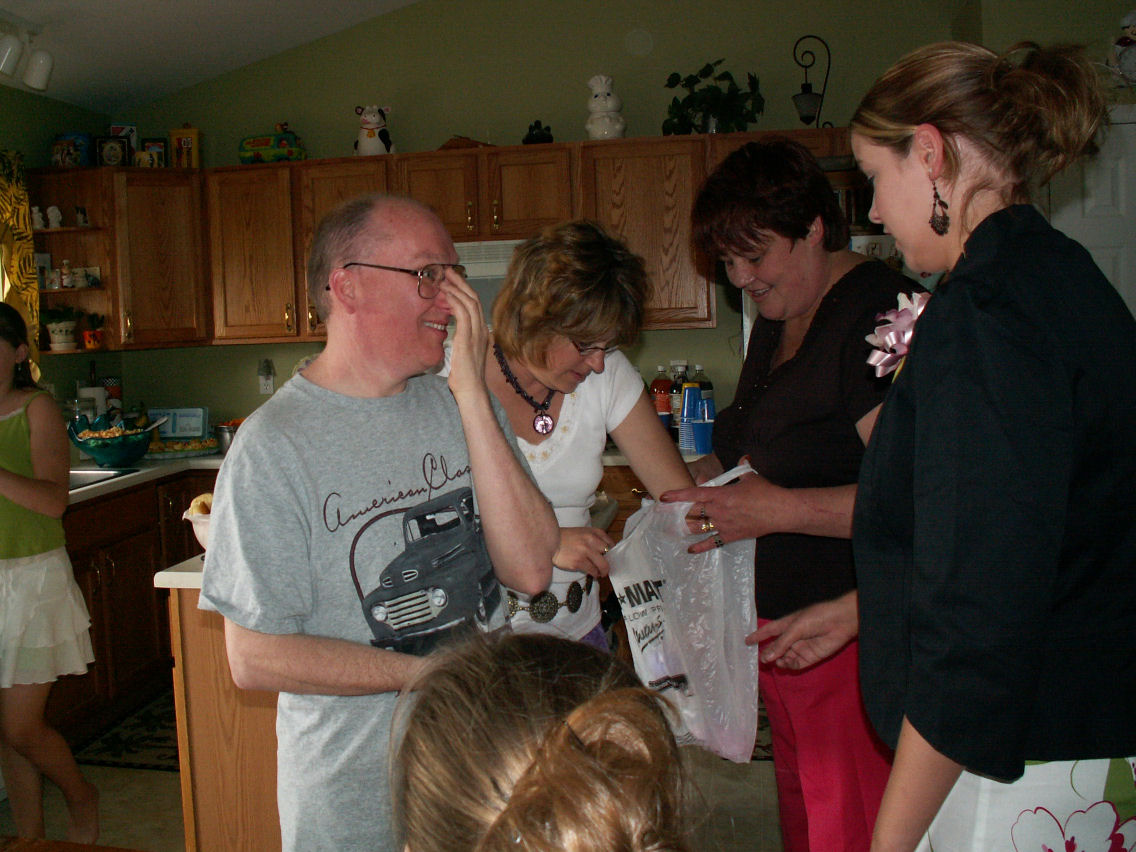
Working with the Mentally Challenged can be a tough job. If you are considering a job within that specific field there are 10 things to keep in mind:
1. The people you care for, care even more for you
2. Losing someone is hard
3. Some people can get you to do things for them that they could do themselves
4. Give options
5. Let them try to do things on their own (you are there to assist them with living not live for them)
6. Take good care of yourself (including personal hygiene)
7. Introduce them to everyone
8. Smile even when things are rough
9. Don’t encourage negative behavior, reward positive behavior
10. Be ready for anything.
P.S. Mentally Challenged people are the most loving people on this earth. It is best to approach a job working with the MC from a best friend’s point of view. Treat them as though they are your best friend and they will be.
Tuesday, June 13, 2006
Case Study & Team Leadership

1. Michael is a coworker and he has been assigned to your team. You have no choices, but to work with him and his abilities. Michael is a worker with a MBA in Marketing and is the Vice President of the St. Louis region of Core Express, a company that builds telephone networks and sells them to Southwestern Bell and other telephone companies. Michael always does just satisfactory work but that’s all.
When projects fall behind Michael’s work is slower or less accurate, the other associates/technicians have to help him catch up when confronted work speeds up, but then slowly reverts to mediocre performance. What type of trouble maker is this? What can you do as the team leader when assigned to a project with this team member?
1. Low self esteem
2. A Member Who Does Not Carry Thier Load
3. Overly sensitive
4. Can’t keep their cool
5. Information hoarder
6. The Naysayer
7. The know it all
8. The prima donna
You can respond to this question: bignatelu@hotmail.com
Tuesday, June 06, 2006
What First Money or Mission?

Continue to be money driven and be out of business in a year’s time; and with only mission an organization cannot continue to sever the very people they are trying to help. One good example to understand this principal comes in a story. The story of the little boy who was on a mission to find his dad a father’s day gift:
There was a little boy on a mission to find his dad a father’s day present. The little boy only had a small savings of $5 but it was important for him to go look. He went to the shoe store to look for shoes, but they were too expensive. Next he went to the bakery, but the goods would have molded quickly. He went to the tackle shop, but the fishing lures did not seem to be the perfect gift for his dad.
It was getting late and dark outside. The boy had to be home by dark. He stopped at a watchmakers store on his way home. Out side he ran into a gentleman to whom he told his story about the father’s day gift. The man bent down and handed him $100. The little boy took that $105 into the watchmaker’s store. The kind gentleman was sitting on the bench when he came out of the store.
The man asked the kid, “So, what did you get him?”
The kid responded, “nothing from the watch shop that’s were my dad works!”
“What are you going to get him?” The man asked with a confused look on his face.
The kid responded, “I think I’ll give him an awesome rock I found and a kiss for father’s day. I’ll spend the $105 on candy for my friends and me.”
The moral of the story: the kid’s mission was to find his dad a father’s day gift and the man thought it was money that was important to the kid. Without money organizations can not possibly continue to operate, but without the right mission they would not exist.
Friday, June 02, 2006
Advertising & Not-for-Profit Organizations
 There are two different types of Advertising: Image (Brand) advertising and Retail advertising. Image advertising is a way to change the life styles we live, and the items of importance to a society. Retail advertising is a way to move people to buy a specific product from a specific place.
One good example of Image advertising is a full page advertisement for the YMCA; it may show some kids in the daycare while the parents work out in the gym, the advertisement might read: we build strong kids, strong families, and strong communities. A good example of retail advertising might be the advertisement of ¼ a page for the YMCA, with a coupon for one month’s free membership if you sign up before the following month.
Nonprofit image advertising could be thought of as a way to change the way people think, feel, or act about their organization. Not only that, but image advertising can help people become informed of ways to: donate, volunteer, or participate in a program or service that they wanted to, had the desired to, but never knew, that such a/an program or organization existed.
Thursday, June 01, 2006
Marketing a Good or Bad Mindset for Not- for-profit Organizations?
One definition for the term marketing includes: any action, process, or situation implemented for the purpose of selling a product, service, or idea. The word selling is where most people have a problem. In a Non-profit organization there is no such thing as selling. There is programming, fundraising, recruitment, accounting, grant writing, but absolutely no selling. Or do non-profit organizations sell?
Selling is nothing but a way to make products, services, or ideas desirable to another person so that they try to obtain those products, services, or ideas. An employee can sell a good idea to his boss in the same way the YMCA can sell memberships to potential members.
What does it mean to sell a product, service, or idea? three things must happen before you can say something was sold: 1. A business or person must be helped or improved, 2. The person being sold must feel the same way about a product as the salesperson feels, 3. Everyone within the transaction must understand enough infromation about the product that they respond with positive actions.
Well, Non-profits certainly do not have a title position called salesperson or account representative, but everyone in the organization ought to be a salesman for the organization. What is the role of the “salesperson” in a not-for-profit? MARKETING!
Making services/programs available
Arranging materials to be easily understood & desirable by "markets”
Relaying feedback to the upper management or board
Keeping all profitable markets open (succesful programs open too)
Encouraging new ideas & new markets to buy into the mission
Targeting specific markets that may have interest in the mission
Investigating new ideas and
Nudging people to for financial resources: donations, grants, or program
Growing the organization because of successful segmentation
Monday, May 29, 2006
Advanced Advertising:

FREE GAS CALL TODAY! The idea behind advertising is to catch people’s attention! Right? This tag line was precisely the way Cool Shades Vehicle Tinting caught people’s attention. The owner was looking for a way to create value for the customer and empathize with the people who suffer from rising gas prices.
Cool Shades in Saint Charles MO is offering a $50 gas card to anyone who gets their entire car tinted before August 30th 2006. The owner said, “The best way to increase business is show people that you care personally about them.” This Ad that ran in Saint Charles County Home Town Family Savings is a great example of how to advertise effectively.
The Ad: featured in coupon style, was to be cut out of and old time gas pump. It is really cool! To this date, this is probably the best example of putting the customer first and meeting the needs of the growing community.
Advertising like this takes customer service one step further than normal. This idea catches people’s attention because the business owner was able to empathize with the community (customers) and not just sympathizes. He knew & understood how increasing gas prices reduced the discretionary income contributing to things like car window tinting. But he does not feel down like the customers he servers.
Instead, this smart owner was able to back away from the problem (increasing gas prices) and offer a solution ($50 free gas).
Basicly reading this just saved you $50 on your next gas bill: if you pick up a copy of HOME TOWN FAMILY SAVIGNS.
Thursday, May 25, 2006
I Set Goals! Why Am I Not Successful?

There are a lot of busy people out there. I’m sure you’re one of them. Just being busy is not accomplishing your goals. You know that but why? I know you work hard just like everybody else, and it seems like the only way to be successful is to “GET LUCKY.”
I was told a long time ago that LUCK is when: Living, Understanding, Connecting, & Kindness enjoy each others company or to put it in simple terms: “When opportunity meets preparedness.” ~ Brian Bush.
Living- breathing, moving, thinking, and learning.
Understanding- knowing the opportunities, knowing something, and putting it to use.
Connecting- finding the right situation.
Kindness- knowing that you must put the needs of other first.
Alright, alright, alright……how does all this tie into goal setting and being successful.
When you set goals it is important to attach a value to that specific goal. Simply saying I want to buy a house is an idea but it is not a goal. Let us think about this for a second. What are your values????
Do you value family, wealth, security, teamwork, planning ect……
Now that you have determined some of your values…..every goal that you set should be formed around those values.
If you value
Family: I want to save/earn enough income so that I can help my family
Wealth: I want to save/earn enough income so that I can obtain wealth
Security: I want to buy a home so I have security
When you attach values to your goals the goals you set become important to you. When you are working on value-goals those opportunities to get lucky open up.
Get lucky set a Value-Goal today!!!
Nathan Bush.
636.399.0416
http://www.nonprofitmindset.blogspot.com/
May 12, 2006
Friday, May 19, 2006
Close More Sales With Referral Based Selling

Many salespeople would like referrals, matter-a-fact it is what pays a lot of people’s living. Sales books and CD’s everywhere pride on referrals. It was a Thursday when I first introduced referral based selling into my sales process.
I was on a sales call and it hit me, like most good ideas. It was the first meeting of the day, and I was meeting with Bob from BBrook Auto Insurance. He was the owner of this franchise and was just starting out. He had been in insurance sales for a while, but decided that he wanted to own his personal firm.
His insurance policies focused mainly on high risk auto insurance sales. I was trying to help him advertise in Hometown Family Savings, the direct mailer magazine I have been selling for. The only reason I was in his office to begin with, was because of a referral from my hairstylist (anyways).
The conversation that closed 7 sales (including this one) went like this:
Bob: So, I want to purchase a ¼ size space I think it would help me out…
Me: Yes it would, and I understand you are ready to make a decision?
Bob: Yes I am!
Me: Bob, I don’t think it would be in your best interest to do so right now….
(I turned down a sale WHAT?) No I did not! follow me for a second
Bob: What?
Me: Bob, to help your AD do the very best, I think that we need to fill the page with other businesses that revolve around high risk auto.
Me: Do you consistently deal with any traffic lawyers or any other business that complements your company? If you do, we should have them on the same page… To receive the best response possible we should fill the page with companies that people go to when they are in high risk auto situations.
Bob: yeah that’s a good idea; I want my AD to be looked at more often.
Me: So bob, why don’t you talk to the people you do the most business with, and see if it would be beneficial for them to commit with you. Until then I can not sell you this space….See until this is the best decision for you; I can not let you make a mistake….
Thee days later I sold his entire network because it was in their best interest.
Five things that help close referral sales:
1. Integrity
2. Problem solving
3. Turn customers into salespeople for your company
4. Make the product desirable, but only obtainable with referrals
5. Patience (Don’t pressure customers into buying)
Thursday, May 18, 2006
Volunteer Management

Recruitment, Retention, & Reward
Recruitment
The 4 Secrets of Superstar Sales People.
1. Positioning and Being Prepared for Volunteers.
2. Provide Potential Volunteers Time to Think.
3. Probe, Don’t Push Volunteers Away.
4. Prevent Misunderstandings (Use Good Communication Skills).
Retention
You must B.O.T.T.L.E your volunteers if you would like to retain them.
Believe in the volunteers
Offer Orientation
Train Volunteers
Trigger action
Listen to feedback
Evaluate their progress
Reward
The only way to truly reward your volunteers is L.O.V.E them.
Listen to their needs
Offer support
Value their work
Encourage volunteers
The best way to introduce a volunteer program is complete the 4 steps to reaching organizational maximization:
Research
Plan
Implement
Evaluate
Wednesday, May 17, 2006
College AH! Where did it Go?

“10 Steps For Students Who Are Graduating”
College is over! It is the end of the semester and graduation is this Saturday. I am truly the most scared I have ever been in my entire life. College has been fun though, and I have had some great times.
There were things in college that have shaped my thoughts, beliefs, and actions. After only 3 years its over! Up until now my life has been easy, fun, and comfortable; all I had to do was what I was told.
Man I had some great times!!!
Now it is time for me to be set free. Free?? Was not I free before? NO! I was in the educational system, and now I have the whole world in front of me. I have so many questions that I need to answer myself NOW:
What do I want to do for a living?
What kind of hours do I want to work?
What kind of benefits do I need?
How in the hell do I pay all these bills?
How do I become Wealthy?
How do my peers see me?
What do I want to be known for?
Do I have enough experience?
Who will give me the chance?
Will the person who employs me pay for my continued education?
How can I make a difference in the world?
What do I truly like to do?
What needs to be done?
Where are all my friends now?
What kind of jobs are they getting?
The list goes on and on, but there has to be a rational way to take the step from college into the real world right? Answer: Yes! There is a logical step by step guide to follow.
Here are the10 steps for students who are graduating:
1. Email people
Send an email to all your contacts (teachers, friends, family, coworkers, business owners ect...) thanking them for all their support guidance through your college experience. Let them know how much they mean to you.
2. Keep a journal
Write down your best marketable qualities. Write down things that happen to you. Keep writing all your ideas and review them at the end of the month.
3. Talk to everyone about your skills (Network- not neteasy-netWORK)
Go to seminars, association meetings, and family events. Use these opportunities to build relationships with people. Call other professionals and ask them if they have time to talk to you about their job.
4. Read a motivational book or magazine on success
There are many books written to inspire you as well as focus your attention on your personal best qualities. Try to apply principals that you learned in books, to your life
5. Listen to speakers on your Ipod
It may sound funny but I did it and it helped me focus my personal goals as well as teach me how to negotiate my salary.
6. Review interview question
I feel it was important to practice before the “game.” It dose not matter how good of a programmer you are if you can not sell yourself in the interview.
7. Do something to help other people for free
Zig Ziglar states “You can have everything you want in life if you are just willing to help enough other people get what they want first!”
8. Write your resume
By the time most people graduate they already have completed this step.... but, go back and review it. Try to structure the resume to the specific job you are looking for.
9. Find a mentor – someone you look up to for guidance
10. Set personal value-goals
Read my section on setting value-goals and it will make a difference in your life.
Friday, May 12, 2006
A Testimonial from a Volunteer

I am a volunteer, and I was asked to help your organization. I am dedicated to helping the people this organization serves.
I am your volunteer, and I need an orientation. I am not just free labor. I am not here to just clean the floors or take out trash (although I will).
I am a volunteer, and I want to make a difference. I have a career already, and I came to your organization ready to use the skills I have already developed to fulfill the (organizations) mission. In every way I want to help because I love what this organizations stands for.
I am a volunteer, and I want people to at least say thank you to me, when I do something.
I am a volunteer, and I spend my own money, time, and resources to help this organization.
I am a volunteer, and this organizations success depends on my ability to perform. I struggle with my family, friends, and peers; they do not understand why I a volunteer.
I am a volunteer, to give to the community so that other do not have to suffer, so that kids can grow up with the right head on their shoulders, so that people can have the same opportunities as myself.
I am a volunteer, and I would put my life on the line to defend this organization because I stand by the principals from which it was founded. I want people to know that the values of this organization are the same as mine.
I am a volunteer to bring peace in the world, to those who are attacked in this world’s war, and they don’t know why, or how come.
Yes! I am a volunteer, and I know that this organization, with all my heart, represents me and I represent this organization. Where you lead me I will follow and where I lead you, you too will follow.
I am a volunteer changing the world, living in the world, and helping the world one person at a time.
Are you a volunteer?
Thursday, May 11, 2006
Any Business Owners that Need Training Call Me!!!

8 out of 10 businesses will fail in the first year of operations. Each and every day I find another business owner that actually has no clue what in the world he/she is doing. There are so many businesses out there that fail and now I understand why.
Today while I was out soliciting potential advertisers, I found a couple more of those business owners that I just wish had a clue. Today started Ok things were going fine. The first business owner was perfectly normal. He pretty much had things under control. But things went down hill quickly.
At one point I remember going into a restaurant and I remember the owner saying to me, “we already advertised on the radio, in the newspaper, and other publications for May. None of them have worked out.”
I ask him, “How do you track your response, how can you tell if they worked or not?”
With a confused look on his face he replied, “Track my response?”
I said “yeah, you know, how do you measure your return on investment?”
He looked puzzled and responded, “Return on Investment?”
I sat down with him and tried to helped him understand that a return on investment means an increase in the amount of money you make after (advertising) spending money to better the business and so on…..
I still don’t know if he understands, but what I do know is that if there was any way at all to help this business owner I wish I could do it. Training business owners seems to be 80% of sales.
When I finally help this business owner understand what is going on I am sure he will buy from me. The reason he will buy is because I know our Direct Advertising Magazine (Hometown Family Savings) will help him grow his business. He just doesn’t understand that yet.
Why do businesses fail? Many people will tell you things like:
Lack Of Capital
Poor Management
Flooded Market
Trend Dies
I think a business can only grow if:.
Research The* owner is well educated
Plan The* owner sets Value-Goals
Implement The* owner practices horizontal leadership
Evaluate The *owner does not have a self-destructive attitude.
*Owner can be replaced with CEO, President, Boss, or Manager
Do you understand Return On Investment (ROI)?
Wednesday, May 10, 2006
The Value-Goal

"How to set goals that will be accomplished"
Every book you read will tell you that you need to have goals. You need to set goals, and you need to complete goals. That is true; however, what is a goal if it doesn’t mean anything to you. I could set a goal to build the tallest building in the world, but what actually happens? Nothing! Unless I attach a VALUE to that specific goal.
I have six personal values that guide my decision making and help me set goals:
Education
Charity
Respect
Leadership
Organization
Teamwork
Every goal I set has these six values attached to help me accomplish my goal with promptness and efficiency. When you attach a personal value to your goal, only then does the goal become important and obtainable.
So, how come some people never reach their goals?
Simply, It was not important to them. They did not have a VALUE-GOAL they probably had an Idea. The difference between an idea and a goal (value-goal) is: an idea is a feeling that something is likely. A VALUE GOAL is based on your core principles, and is a measurable something that (if not accomplished) will tear on your personal foundation.
Every time I am granted the gift of leadership, my personal plan is form all around my values.
In 2005 I was on the Executive Board of a Lindenwood Student Organization. I though it was time to implement a rewards system that would further ingrain these six values in all the students that went through the program.
I thought of these six awards:
Highest Scholar Award (highest grade point average) – Education
Heat Award (person who did the most volunteer hours) – Charity
Campus Citizenship Award (Person that demonstrated best integrity) – Respect
Valued Leader Award (high leadership skills) – Leadership
Prompt and Prepared Award (On time and prepared)- Organization
Committee Award (Best Committee) – Teamwork
Having specific “VALUE-GOALS” to achieve each semester will create a culture in that organization that is focused on significance, service, and success. If it is true that success breeds success then VAULE-GOALS matter. This rewards system was also a perfect demonstration of how to set VALUE-GOALS. If a student wanted to win an award they automatically knew the value that was attached to their goal. This made competition tough, but it helped move the organization into a more successful mindset.
Students that were once a part of this organization are now very successful. The key to their success is the ability to set VALUE-GOALS.
Why do I want to graduate from college? Answer: because I value my education.
How do you set goals?
Sunday, May 07, 2006
My Fiance is the best salesperson ever.
My fiancé is the best salesperson ever. Not to brag, but I learn a lot of things just from paying attention to her.
It was two days before this past Valentines Day (February 2006). She said to me, “Nathan, what are YOU doing tomorrow?” I just knew what was coming next….. She was going to ask me to go eat lunch with her, or waist my time when I had work to get finished… (I was working on deadline for a few accounts…. in sales).
So, I responded the only way I could, “I’m working tomorrow and it is deadline. I’m really busy. “Awe……pause ...she said. “That’s okay.”
Then she asked me (In her sweet lets go get lunch voice), “where are you going to be at?” and I was on to her trick. I said “all over town.”
She chuckled as she closed the sale on me like this……
“Well that’s great” she snickered….”I picked out my Valentines Day gift. It’s at Victoria’s Secret behind the counter on hold. All you have to do is go there and pick it up!” She said with a huge smile on her face.
What could I say…. She had made it easy, quick, and convenient to buy. How could I honestly say NO!?
I couldn’t!!!!
When I got there, and she had placed not 1 but 2 items on hold. What could I do I had to get both. I was thinking for our first Valentines Day I would spend, ya know, maybe $20 and move up from there over the years. Nope! $150 all because she is a good salesperson…..
Message sent…….message received.
How convenient is your service or program to buy?
Friday, May 05, 2006
Horizontal Leadership
 What do most people think of when they hear the word “leadership”? Some of the answers I received when I asked over 300 people at Lindenwood University this very question were, “strong, powerful, the boss makes decisions, likeable, and courageous.” People tend to associate a leader as a person who is over a group of people.
Leader
Followers
Followers
Leadership as defined by the dictionary is to influence people’s actions, beliefs, and/or decisions.
Leadership in the most common understanding takes a (visually) vertical approach. Kouzes & Posnes in their book Leadership the Challenge state, “The climb to the top is arduous and long.” Many people describe a leader as someone who, “is at the top of the ladder.” They make take charge. Leadership is recognized as the person who has the most influence, therefore recognized at the highest point in a group.
Horizontal Leadership
I’m here to tell you that leadership is not at the top (visually) or at the bottom (visually, as in servant leadership). Leadership is horizontal. What does this mean?
Followers Leader Followers
True leadership (influencing people’s actions, beliefs, and/or decisions) can only happen if the leader is seen on the same level as the rest of the people in the organization, group, or association. They share the same values, ideas, and beliefs. When people who are peers feel at any time that they are below the leader, anxiety well be felt by the peer group, and they will ultimately be envious of the leader’s position.
This was very obvious this in 2005 when I was working with a campus organization at Lindenwood. There were about 35 people in our organization and many of them were very ambitious people. Paul was the president of the organization at the time.
Paul was a very effective leader.
He had this ability to help people reach their full potential, and in turn the organization grew leaps and bounds. One day I ask Paul, “how are you such a great leader?” his answer was profound he said, “I ask others for advise”
The goal of a leader is to help their peers understand that they are on the same level. A great leader truly and honestly appreciates the input from others. My idea behind leadership is that a leader organizes other people’s thoughts, beliefs, and ideas to be productive. A leader is not the first to go into a room, a leader is the person whose peers have the desire to find out what is in the room, and the leader organizes the trip.
How do you see leadership???
For Part 2 of Horizontal Leadership: Click HERE
Thursday, May 04, 2006
Ten Tips for Successful Phone-Drives that Raise More Money

1) Make your donation first
How can you honestly expect someone one at the other end of the phone to make a donation if you yourself haven’t even made a donation? Wanting someone else to do something you are not willing to do dose not make much sense. Do you believe in the organization? Well then make YOUR donation.
2) Have the Story
Every successful phone drive is backed by a strong success story by the organization. Get everyone making the calls to understand the story and be able to recite it from memory. Powerful stories provide pictures for the prospect to visualize when making a big commitment.
3) Your smile will bring their smile
Smile before you dial. It is important to love what you are doing and why you are doing it. If you are not smiling your prospects will be able to tell, and a very small number of pledges will be make that day.
4) Find the decision maker
If the prospect says, “I need to talk to my husband.” You might respond, “Is he the one that will ultimately make this decision.” “I would love to talk to him. When is he available?”
5) Ask for exact amounts
It is better to ask for an exact $25 or $75 commitment. You might say “with your support last year at $25 the organization was able to accomplish amazing things…..this years we would be great if you were in a position to give at the $50 level or higher???”
6) No! “I don’t know enough information”
When a potential donor says “no” all that means is they don’t kNOw enough information about your organization. You believe in it or you would not be calling them. Well you kNOw way more information than they do, and it is your responsibility to help them understand WHY they should donate.
7) Think in their best interest
List the benefits of donating to help the potential donor see how they are exactly helping. If they are going to be recognized tell them how. Getting a potential donor to commit to a donation is as simple as helping them see how they will benefit from the donation……even when they benefit by feeling good about doing something right!!!! Help them to feel the way you feel about the organization!!!
8) Suggest different giving amounts
Never ask for money like this. “We are raising funds for the Boy Scouts. Do you want to donate?” It is better to give them a choice. Try this for example, “we have three levels we are excepting pledges at. First, the bronze level at $25 will help people like Dale make it to camp. The second level is the silver level at $50 and so on….”
9) Negotiate
Often prospects will say I can not afford to give at any of the levels you are asking. That’s Ok! Ask them why. They might respond “I do not have that kind of money available.” Your response might be “that’s ok I know how you feel, many of our top donors felt the same way before they made their decision, what those select few top donors have found out is that giving at that stretch level is not as hard as they had though. In fact year after year they continue to support our organization at the same level. If you would like to be a top donor we can work out a payment schedule.”
10) Follow up! Always follow up!

